
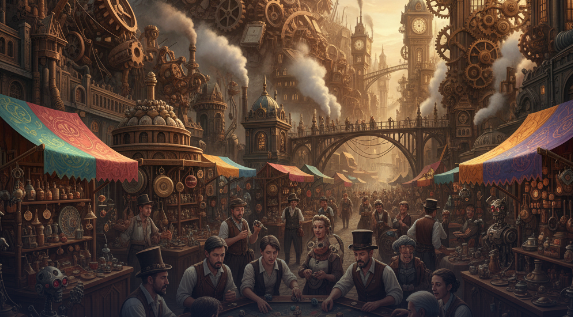
This Is a Tool I Wish I Had When Teaching Game Design
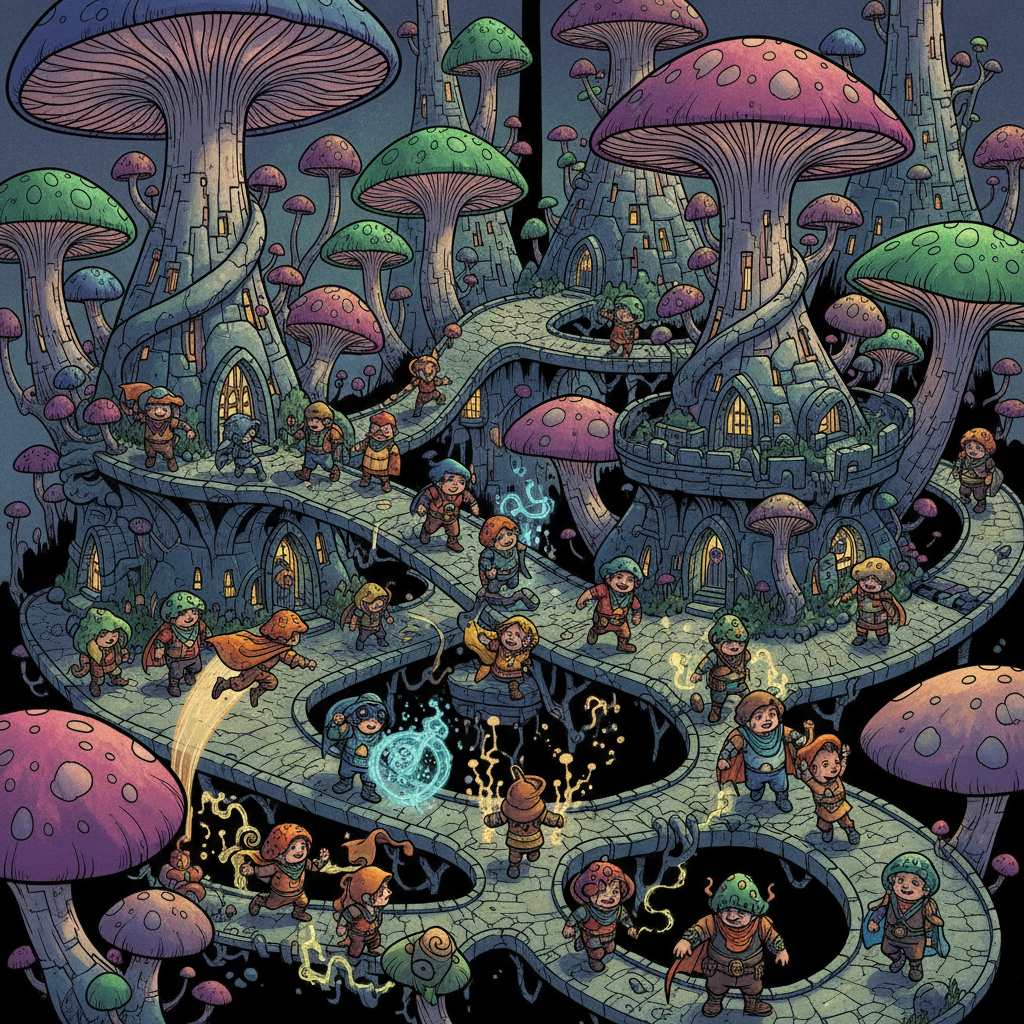
Generate High Quality Concept Art for your Game
Here’s a Sneak Peek 👀
If you’ve ever taught Game Design, mentored designers, or tried to design a game yourself, you know this moment all too well:
You understand mechanics.
You know your core loop.
You even know what the player does.
…but you’re completely stuck on what the world should look like.
That gap—between mechanics and world—is where a lot of great game ideas stall out.
That’s exactly why we built the Game World Generator from The Game Beyond.
This is a tool I genuinely wish I had when teaching Game Design.
And now, here’s a sneak peek.
The Hardest Part of Game Design Isn’t Code — It’s the World
When people talk about game design tools, they often mean engines, scripting, or asset pipelines.
But in practice, one of the hardest problems in game design is world ideation:
What does this world feel like?
Is it hopeful or oppressive?
Who lives here?
What kinds of stories and mechanics does this space invite?
A strong game world doesn’t just look good — it suggests gameplay.
That’s where most designers get stuck.
Introducing the Game World Generator (Exclusive Preview)
The Game World Generator is an exclusive game design tool built specifically to help designers break through creative blocks when designing game worlds.
It’s not just an image generator.
It’s not just a prompt tool.
It’s a worldbuilding design system.
How the Game World Generator Works
At its core, the tool lets game designers shape a world using intentional design controls, not vague prompts.
You can:
🔹 Combine Game World Themes
Choose one environment or mash up two:
Prison + Racetrack
Jungle + Ancient Ruins
Futuristic City + Rooftops
These aren’t random images — they’re designed world constraints, the same way professional designers think.
🔹 Control Era, Tone, and Audience
Sliders let you define:
Era (past, present, future)
Utopian ↔ Dystopian tone
Audience age & art style
Young (classic cartoon)
Teen (superhero / comic book)
Adult (photorealistic, cinematic)
This matters because game worlds are never neutral.
They always communicate who the game is for.
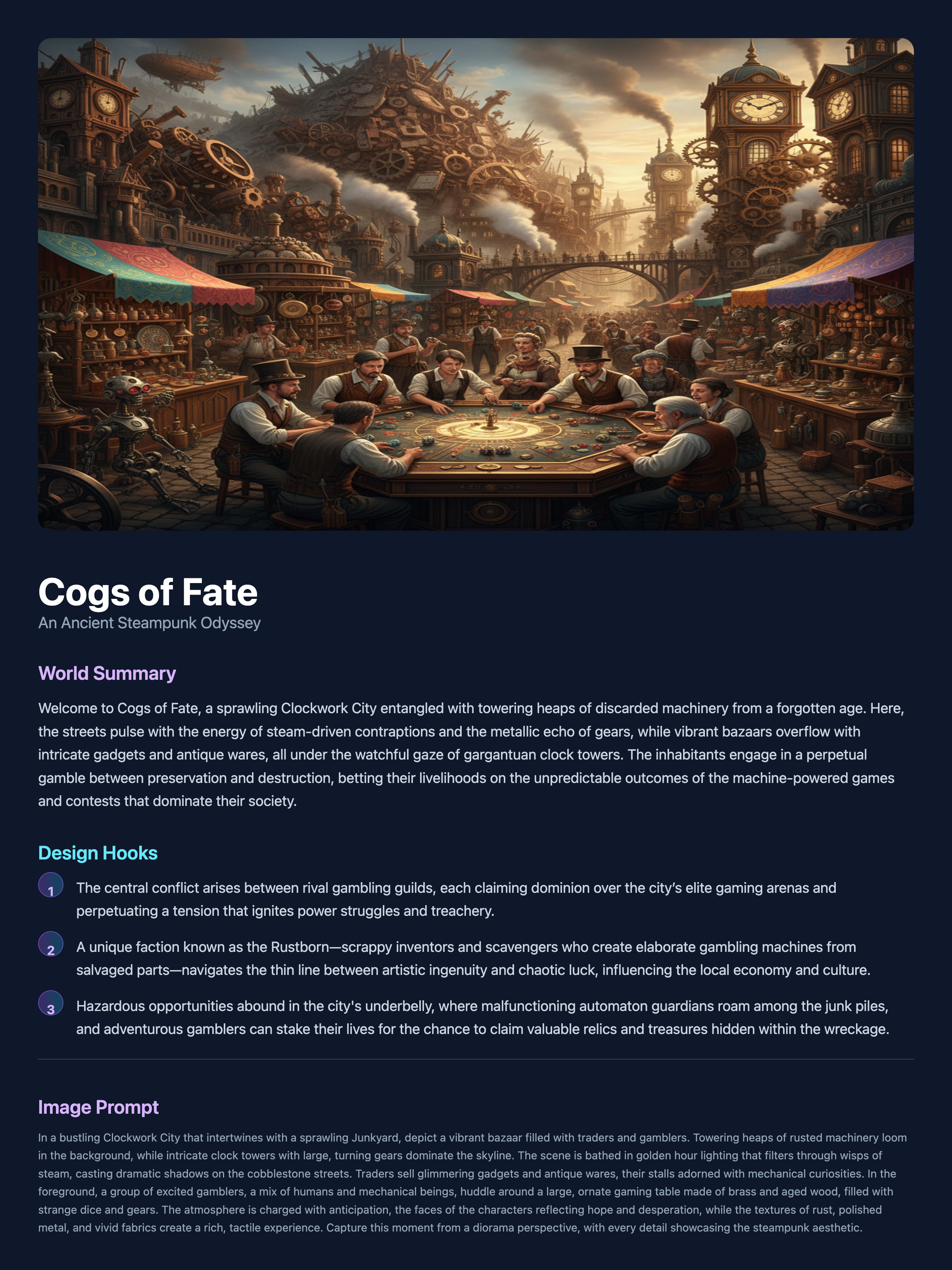
Generate Game Design Cards
🔹 Add Game Seeds (What Players Actually Do)
One of the most powerful features is Game Seeds — core gameplay verbs like:
EXPLORE
INFILTRATE
BUILD
RACE
NEGOTIATE
BETRAY
This ensures the world doesn’t just look cool, but supports actual gameplay design.
🔹 Generate Worlds When You’re Stuck
With one click, the generator produces:
A game world description
Design hooks (conflicts, factions, hazards)
A copyable world prompt
A generated visual reference
It’s ideal for:
early ideation
pitching concepts
classroom exercises
solo designers hitting creative walls
Why This Is a Real Game Design Tool (Not a Toy)
Most “world generators” stop at aesthetics.
This one doesn’t.
The Game World Generator was designed from years of teaching Serious Game Design, and it shows:
Worlds imply mechanics
Visuals reinforce systems
Tone affects player behavior
Constraints create better designs
In other words:
This tool thinks like a game designer.
Perfect for Students, Indies, and Professionals
Whether you’re:
teaching game design
learning game design
building an indie game
running a game jam
or just stuck staring at a blank design doc…
This tool helps you move forward.
Fast.
Part of The Game Beyond Design Ecosystem
The Game World Generator is part of The Game Beyond, a platform dedicated to:
teaching game design through play
building better design tools
helping designers turn ideas into playable systems
If the generator helps you imagine a world,
The Game Beyond game design school helps you turn that world into a real game.
Try the Game World Generator (Exclusive Access)
This is an early, evolving tool — and we’re actively shaping it based on how designers use it.
If you’ve ever thought:
“I know how my game works… I just don’t know what it looks like yet.”
This tool was built for you.
👉 Explore the Game World Generator
👉 Learn Game Design at The Game Beyond
Final Thought
Good games aren’t built from assets.
They’re built from worlds that invite play.
This is the tool I wish I had when teaching Game Design.
Now it exists.